Engine efficiency often hinges on a single, overlooked component: the precision of oil filtration. While standard replacements suffice for average commutes, high-performance engines and heavy-duty industrial machinery frequently demand specifications that off-the-shelf parts cannot provide.
The transition toward specialized engine oils and tighter tolerance machining has shifted the focus from simple particle capture to optimized flow rates and specific micron ratings. This is where the implementation of a custom oil filter becomes a critical engineering decision rather than a luxury.
By analyzing the interplay between filtration media, housing design, and fluid dynamics, operators can significantly extend component lifespans. This article examines the technical imperatives of custom filtration and how to evaluate these systems for maximum operational reliability.
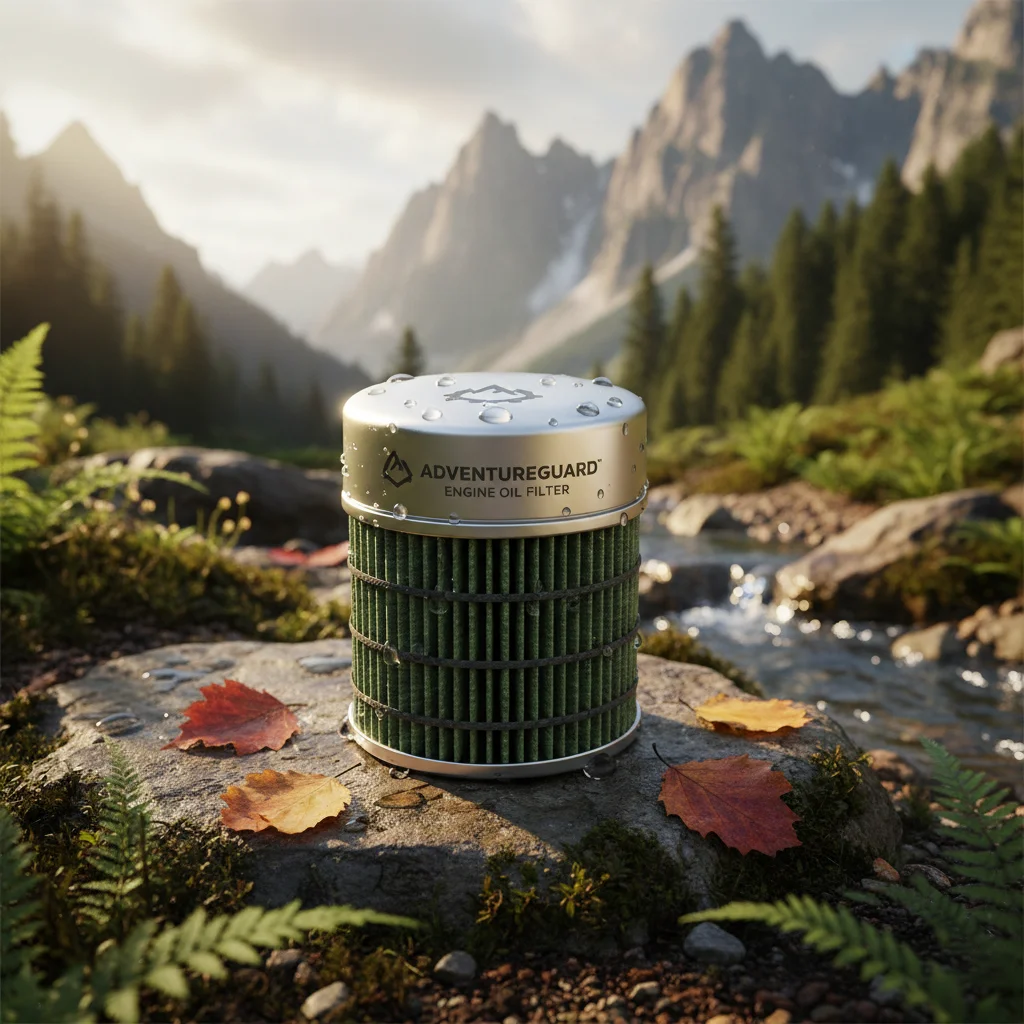
A detailed view of a high-precision oil filtration unit designed for specific fluid viscosity and flow requirements.
◆ ◆ ◆
◆ ◆ ◆
Filtration Dynamics in Specialized Engines

Comparison of standard versus customized filtration media density.
Standard filtration often operates on a "one-size-fits-most" logic, which can lead to premature bypass valve activation or insufficient contaminant removal in extreme environments. In specialized automotive and industrial sectors, the oil is not just a lubricant but a coolant and a hydraulic fluid.
When the operating environment involves extreme temperatures or high particulate loads—such as in construction machinery—the demand for a tailored solution increases. Customization allows for the adjustment of the pleated surface area, ensuring that the filter does not become a restriction point in the lubrication circuit.
—
Technical Parameters of Custom Design
The engineering of a custom filter begins with the Beta Ratio, which defines the efficiency of the filter at a specific particle size. Unlike standard ratings, custom specifications allow engineers to target the exact micron level that threatens the specific bearings or journals of a particular engine model.
Material selection is equally critical. For systems transporting aggressive synthetic lubricants or fuels, the integration of Nitrile Butadiene Rubber (NBR) for seals and hoses is essential. NBR's inherent resistance to oil and diesel prevents degradation and leakage, maintaining the integrity of the pressurized system across a working temperature range of -20℃ to +100℃.
Furthermore, the physical housing must be optimized for the available space without compromising the internal volume. By utilizing advanced moulding and cutting services, manufacturers can produce filter housings that fit non-standard engine bays while increasing the total media surface area for better dirt-holding capacity.
—
Balancing Flow Rate and Particle Capture
One of the primary conflicts in filtration design is the trade-off between efficiency and pressure drop. A filter with extremely fine pores will capture more contaminants but will increase the resistance to oil flow, potentially starving the engine of lubrication during cold starts.
Optimal filtration is achieved when the media's permeability is precisely matched to the oil pump's volumetric efficiency, ensuring maximum particle capture without triggering the bypass valve prematurely.
To resolve this, custom designs often employ graded-density media. This approach uses a coarser outer layer to capture larger particles and a finer inner layer for microscopic debris, distributing the contaminant load throughout the depth of the filter rather than concentrating it on the surface.
—
Performance Index Comparison
When comparing a custom solution to a standard replacement, the most telling metric is the "service life extension index." This index measures how long a filter can maintain its efficiency before reaching a critical pressure differential.
Customized filters typically exhibit a more linear pressure increase over time, whereas standard filters often show a sharp spike as the surface pores clog rapidly. This stability is what allows heavy-duty fleets to extend drain intervals without risking engine wear.
Figure 2. Relative Efficiency Index by Filter Type
—
Operational Scenarios and Risk Mitigation
In a typical industrial setting, such as a construction site with heavy machinery, oil filters are subjected to high vibration and extreme temperature swings. A standard filter may suffer from "media migration," where the filter material itself breaks down and enters the lubrication system. A custom-engineered filter mitigates this by using reinforced end-caps and high-strength binders.
For manufacturers evaluating their fleet maintenance, the risk of oil starvation is the primary concern. Implementing custom filtration systems allows for the integration of more precise bypass settings, ensuring that oil continues to flow even if the filter is clogged, but only at a pressure that prevents catastrophic pump failure.
—
Evolutions in Filtration Media
The industry is moving away from traditional cellulose-based media toward synthetic nanofibers. These synthetic materials provide a significantly higher surface-to-volume ratio, which means more particles can be trapped without increasing the physical size of the filter.
This evolution is particularly relevant for the production of oil and fuel delivery systems. For instance, using NBR (Nitrile Butadiene Rubber) in conjunction with synthetic media creates a system that is both chemically resistant and highly efficient. Such combinations are essential for fuel lines and oil cooler hoses where durability is non-negotiable.
As engines become more compact, the ability to customize the filter element—adjusting the pleat count and depth—allows for the maintenance of high filtration standards within a shrinking footprint. This precision is the hallmark of professional vehicle fitting and filter research.
—
Selection Framework for Custom Solutions
Choosing the right custom filtration system requires a systematic evaluation of the engine's operational environment. One must consider the viscosity of the oil used, the expected contaminant load, and the maximum allowable pressure drop before the system enters bypass mode.
A common error in selection is prioritizing the lowest micron rating without considering the flow requirements. If the media is too restrictive, the resulting pressure drop can lead to cavitation in the oil pump, causing more damage than the particles the filter was intended to remove.
The following framework provides a relative assessment of different filtration strategies based on typical industrial and automotive requirements.
Table 1. Filtration Strategy Evaluation Framework
| Requirement |
Standard Filter |
Custom Solution |
Suitability Index |
| High Dust Environment |
Rapid Clogging |
Extended Capacity |
High |
| Tight Engine Tolerances |
Variable Beta Ratio |
Targeted Micron Rating |
Critical |
| Extreme Temp Swings |
Seal Degradation |
NBR Reinforced |
High |
| Cold Start Flow |
High Resistance |
Optimized Permeability |
Moderate |
| Limited Installation Space |
Fixed Dimensions |
Custom Housing |
High |
| Long-term Durability |
Standard Lifespan |
Enhanced Media Life |
Moderate |
◆ ◆ ◆
Questions & Answers
A custom oil filter is engineered to specific performance metrics rather than a general range. This includes choosing a precise micron rating (Beta Ratio) to target specific contaminants, adjusting the media's pleat density to balance flow rate versus capacity, and utilizing specialized materials like NBR for seals to handle specific chemical compositions of synthetic oils or extreme operating temperatures.
In heavy-duty settings, contaminant loads are higher and more varied. Custom filters provide a higher dirt-holding capacity and more stable pressure differentials, which prevents the system from frequently switching to bypass mode. By keeping the oil cleaner for longer periods, it reduces the abrasive wear on bearings and pistons, effectively extending the interval between major overhauls.
While a lower micron rating captures smaller particles, it increases the resistance to flow. If the rating is too low for the oil pump's capacity, the pressure drop across the filter becomes too great. This can trigger the bypass valve, allowing unfiltered oil to circulate through the engine, or in worst-case scenarios, cause oil starvation during critical operational phases like cold starts.
Nitrile Butadiene Rubber (NBR) is chosen for its exceptional resistance to petroleum-based oils, fuels, and lubricants. Standard rubbers may swell or crack when exposed to these chemicals over time. NBR maintains its structural integrity and sealing performance within a temperature range of -20℃ to +100℃, making it the industry standard for high-reliability fuel and oil delivery systems.
Evaluate your operational environment: if you experience frequent premature filter clogging, operate in high-dust areas, use non-standard high-performance lubricants, or have a high cost of engine downtime, custom filtration is warranted. If your machinery operates in a controlled environment with standard duty cycles, OEM filters are typically sufficient for basic maintenance.
This depends on the manufacturer's terms. However, most professional custom filters are designed to exceed OEM specifications. To avoid warranty issues, it is recommended to use custom solutions that meet or exceed the original Beta Ratio and flow requirements, and to maintain detailed records of the filtration performance and oil analysis results.
◆ ◆ ◆
Final Thoughts
Precision in oil filtration is not merely about removing debris; it is about optimizing the entire lubrication ecosystem. The transition to a custom oil filter allows for a scientific approach to engine protection, balancing the critical tension between flow rate and particle capture.
By integrating high-performance materials like NBR and employing targeted micron specifications, operators can move from reactive maintenance to a proactive reliability strategy. In the long term, the investment in customized filtration pays dividends in reduced wear, lower downtime, and maximized engine efficiency.