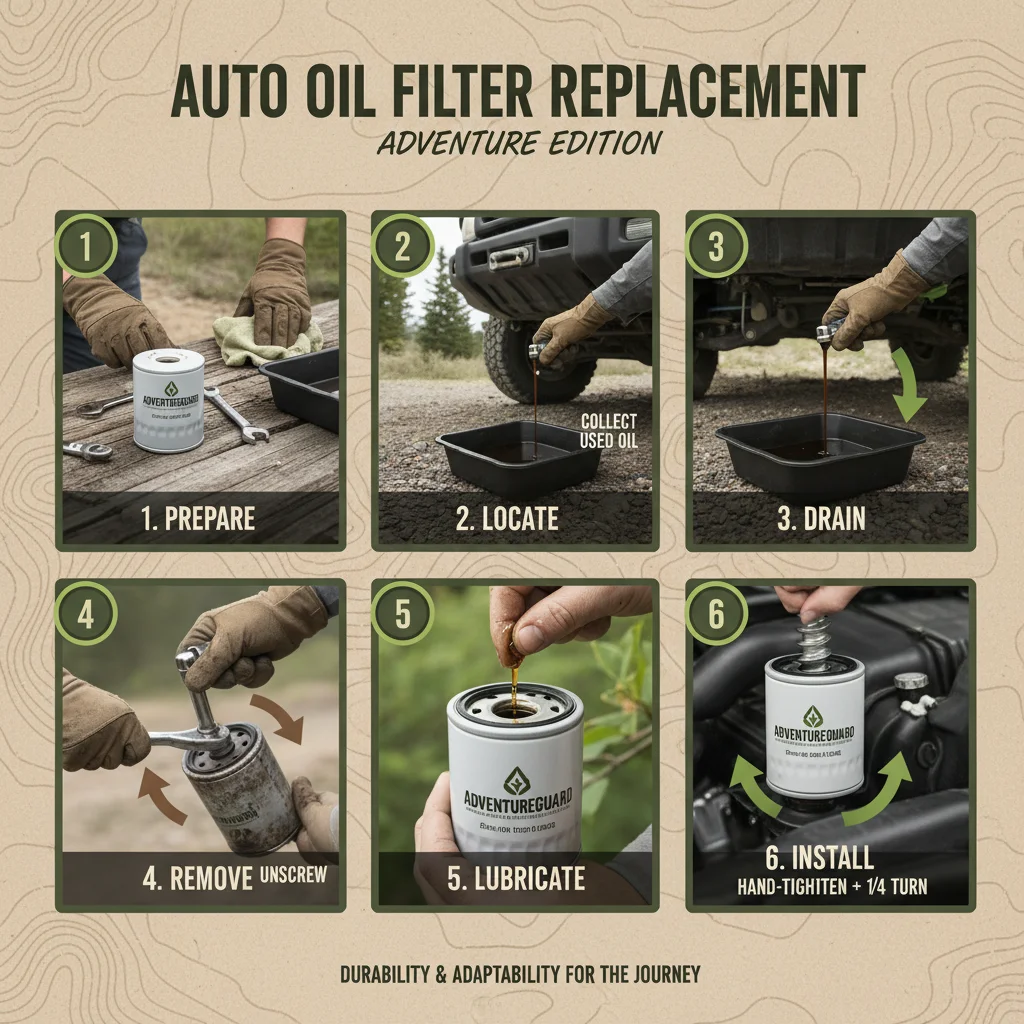
Selecting the right filtration components is rarely about finding the cheapest part, but rather about balancing particulate capture efficiency with engine airflow stability. In the high-stress environment of a modern combustion engine, the difference between a standard filter and a precision-engineered one can manifest as thousands of miles in engine longevity.
The global shift toward more stringent emission standards and the demand for higher fuel efficiency has placed renewed pressure on the automotive supply chain to provide components that maintain tight tolerances over extended service intervals. This is particularly evident in the demand for high-quality China auto oil filtre solutions that integrate Japanese technical standards with efficient manufacturing scales.
This report examines the critical technical requirements for automotive filtration, the impact of material science on engine wear, and the practical frameworks buyers should use to evaluate filtration partners in a crowded global market.

Precision-engineered automotive filters designed to optimize engine airflow and minimize internal abrasion.
◆ ◆ ◆
◆ ◆ ◆
The Evolution of Engine Filtration Standards

Modern manufacturing pipelines integrating IATF 16949 standards for zero-defect filtration.
Historically, automotive filters were viewed as simple consumables with basic barriers. However, the transition toward tighter engine tolerances and high-pressure fuel systems has transformed these components into critical performance variables. Today, the focus has shifted from mere "blocking" to "selective permeability," where the filter must stop micron-sized particles without creating excessive backpressure.
This shift is driven by the need to protect sophisticated internal components, such as variable valve timing systems and turbochargers, which are highly sensitive to abrasive contaminants. The integration of international certifications like ISO 9001 and IATF 16949 has become the baseline for ensuring that these components perform consistently across millions of units.
—
Technical Anatomy of High-Performance Media
The efficacy of a filter is primarily determined by its media composition. High-performance automotive filters typically utilize a combination of Polypropylene (PP) and specialized non-woven fabrics. These materials are engineered to create a tortuous path for particles, utilizing both inertial impaction and Brownian diffusion to trap contaminants while allowing air or oil to flow with minimal resistance.
Structural integrity is equally vital. A filter with superior media but a weak seal is a failure point; "bypass" occurs when contaminated fluid flows around the media rather than through it. This is why reinforced sealing and stable structural designs—such as those seen in direct-fit replacements for Toyota models—are essential to ensure that 100% of the intake or lubricant is actually filtered.
Beyond the media, the housing and support structures must withstand thermal expansion and vibration. The use of injection-molded PP provides the necessary rigidity to prevent filter collapse under vacuum pressure, ensuring that the air-to-fuel ratio remains stable regardless of the engine's RPM or environmental conditions.
—
Impact of Filtration Precision on Component Wear
Micro-particles entering the combustion chamber act as abrasive agents, essentially sandpapering the cylinder walls and piston rings. Over time, this leads to a loss of compression and increased oil consumption. The precision of the filtration media determines the "cut-off" point—the size of the particle that the filter is guaranteed to stop.
The correlation between filtration efficiency and engine life is non-linear; a small increase in particle penetration can lead to a disproportionately large increase in wear on high-friction surfaces like camshafts and cylinder liners.
By utilizing advanced non-woven fabrics, high-precision filters significantly reduce the rate of internal abrasion. This not only extends the service interval of the engine itself but also maintains the efficiency of the combustion process, as clean air allows for a more precise and complete burn of fuel, reducing carbon deposits.
—
Analyzing Airflow Stability vs. Particle Capture
A common trade-off in filter design is the conflict between filtration efficiency and airflow stability. A denser medium captures more particles but increases the restriction (pressure drop), which can force the engine to work harder and decrease fuel economy. The engineering goal is to maximize the "dirt-holding capacity" while keeping the initial pressure drop low.
When evaluating the performance of different filtration grades, we look at the stability of the airflow over the life of the filter. A premium filter maintains a relatively flat pressure-drop curve, whereas a generic filter may see a rapid spike in resistance as it loads with dust, leading to inconsistent engine performance.
Figure 2. Relative Performance Index: Generic vs. High-Precision Filtration
—
Operational Scenarios and Maintenance Cycles
The ideal replacement interval for a filter is not a fixed number but a variable based on the operational environment. For instance, vehicles operating in dusty construction sites or arid regions experience rapid media loading, which can compromise engine health far before the standard 10,000 to 15,000-mile recommendation. In such scenarios, the use of high-capacity filters with reinforced non-woven fabrics becomes a necessity rather than an option.
For fleet managers, the focus is on the "Total Cost of Ownership." While high-performance filters may have a higher initial unit cost, they reduce the frequency of unplanned downtime and extend the intervals between major engine overhauls. Implementing a disciplined maintenance schedule using OE-compatible parts ensures that the vehicle maintains its peak combustion efficiency throughout its service life.
—
Future Trends in Eco-Friendly Filter Materials
The automotive industry is currently navigating a transition toward sustainability, and filtration is no exception. There is an increasing move toward biodegradable media and eco-friendly wood pulp molding to replace certain synthetic plastics. These materials must meet the same rigorous IATF 16949 standards to ensure that "green" does not mean "less effective."
Another emerging trend is the integration of "smart" filtration, where sensors can monitor the pressure drop across the filter in real-time. This would allow for condition-based maintenance rather than schedule-based maintenance, optimizing the life of the filter while ensuring the engine is never at risk of starvation.
As vehicles move toward hybrid and electric architectures, the nature of filtration is changing. While traditional oil filters may see reduced demand in full EVs, the need for high-efficiency cabin filters and cooling system filtration is increasing, as battery thermal management systems require extremely clean fluids to operate at maximum efficiency.
—
Selection Framework for Procurement Managers
When sourcing filtration components from the global market, procurement managers must look beyond the price per unit. A comprehensive evaluation should focus on the manufacturer's quality management system and their ability to provide consistent OEM/ODM customization. The presence of a professional design team capable of optimizing logos and packaging is a secondary but important factor for brand owners.
The risk of using sub-standard filters is "latent failure," where the filter appears to fit but fails under peak operational stress. This makes direct-fit compatibility and material verification critical. Evaluating a supplier's warehouse capacity and lead times is also essential to avoid supply chain disruptions in high-volume distribution networks.
To simplify the decision-making process, the following framework compares generic filtration solutions against high-precision standards across key performance indicators.
Table 1. Comparative Analysis: Generic vs. High-Precision Filtration Solutions
| Evaluation Factor |
Generic Filters |
High-Precision (Premium) |
Operational Impact |
| Filtration Efficiency |
Basic / Low |
High-Precision / Advanced |
Internal Engine Abrasion |
| Airflow Stability |
Inconsistent |
Optimized & Stable |
Fuel Combustion Ratio |
| Service Interval |
Short / Frequent |
Extended Long-Life |
Maintenance Overhead |
| Installation Fit |
Variable / Loose |
Precise Direct Fit |
Bypass Risk |
| Material Quality |
Standard PP |
Reinforced Non-woven |
Structural Durability |
| Certification |
Basic ISO |
IATF 16949 / CE |
Quality Consistency |
◆ ◆ ◆
Questions & Answers
OE-standard filters are engineered to the exact specifications of the vehicle manufacturer, ensuring a precise direct fit and a specific filtration efficiency. Generic filters may fit the dimensions but often use lower-grade media with inconsistent pore sizes, which can increase the risk of particle bypass and reduce the overall lifespan of the engine components due to increased abrasion.
Filter media impacts fuel efficiency through "flow restriction." If a filter is too restrictive or becomes clogged due to poor dirt-holding capacity, the engine must expend more energy to pull air into the combustion chamber. High-performance media balances high capture rates with low airflow resistance, maintaining the optimal air-to-fuel ratio for peak efficiency.
Prioritize suppliers with IATF 16949 and ISO 9001 certifications, as these ensure a scientific quality guarantee system. Additionally, evaluate their OEM/ODM capabilities, their use of premium materials like injection PP and non-woven fabrics, and their ability to provide consistent lead times via a large-scale warehouse infrastructure.
Yes, by effectively blocking micro-particles (dust, sand, and metal shavings), these filters prevent the gradual wear of cylinder walls, pistons, and bearings. Reducing this internal abrasion maintains engine compression and prevents premature failure of critical moving parts, thereby extending the overall service life of the vehicle.
Even a millimeter of gap in a filter seal can allow contaminated air or oil to bypass the filter media entirely. Direct-fit filters are designed for seamless installation, ensuring a reliable seal that forces all fluid through the filtration medium, thereby eliminating the risk of "unfiltered" contaminants entering the engine.
Extreme environments, such as high-humidity coastal areas or high-dust desert regions, accelerate the loading of filter media. In these cases, standard replacement intervals are insufficient. Users should opt for filters with higher dirt-holding capacities and more frequent inspection cycles to prevent excessive pressure drops.
◆ ◆ ◆
Final Thoughts
The automotive filtration market is no longer just about providing a commodity; it is about providing a performance safeguard. As engines become more complex and environmental demands more rigorous, the reliance on high-precision components—from air and oil filters to specialized hoses—will only increase.
For businesses and consumers alike, the investment in premium filtration is an investment in reliability. By focusing on material science, strict quality certifications, and precise compatibility, the industry can ensure that vehicles operate at peak efficiency while minimizing the ecological footprint of engine wear and premature replacement.