Look, I've spent the last fifteen years knee-deep in dust and concrete, watching projects rise from the ground. And if there’s one thing that consistently impacts a job's success – beyond the design and the crew – it’s the quality of the filtration. Specifically, the oil filter element. You can have the most advanced machinery, but if you’re not protecting those engines with a reliable filter, you’re just asking for trouble. It’s not glamorous, but it’s the bedrock of keeping things running smoothly and on schedule. oil filter element quality directly impacts uptime and cost overruns, believe me, I've seen it.
Too many folks treat filters like an afterthought. They grab the cheapest option, thinking "it's just a filter." That’s a mistake. We’re talking about protecting multi-million dollar investments in equipment. A failed hydraulic system, a contaminated engine… those repairs eat into profits faster than you can say “change order.” Understanding the nuances of oil filter element design and application isn’t just about maintenance; it’s about proactive project management and maximizing return on investment.
I've seen enough catastrophic failures linked directly to subpar filtration to become a bit of a fanatic about it. It's a relatively small investment that delivers enormous peace of mind, and, more importantly, keeps the project moving forward. Choosing the right oil filter element – and sticking to a rigorous replacement schedule – is non-negotiable on any site I oversee.

The Critical Role of oil filter element in Construction
Let's be clear: construction is a brutal environment for machinery. Dust, debris, fluctuating temperatures… it all takes a toll. The oil filter element is the first line of defense against this onslaught. It prevents abrasive particles from circulating through engines and hydraulic systems, protecting critical components from wear and tear. Think of it as the lungs of your equipment – essential for keeping everything breathing.
From excavators and bulldozers to cranes and generators, every piece of heavy machinery relies on clean oil to function efficiently. A clogged or compromised filter can lead to reduced performance, increased fuel consumption, and ultimately, catastrophic failure. And on a construction site, downtime isn’t just an inconvenience; it's a budget buster.
Understanding oil filter element Composition and Types
You've got your standard cellulose filters, which are your workhorses - good for general use but can break down quicker. Then you get into synthetic blends and full synthetic oil filter elements, which are tougher, handle higher temperatures, and filter out smaller particles. It depends on the machine and the environment. For something constantly working in extreme heat and dust, you need to be looking at synthetic.
Beyond the material, the construction matters. Pleated filters offer more surface area for filtration, meaning longer life and better efficiency. Bypass valves are crucial – they allow oil to flow around the filter if it becomes severely clogged, preventing engine damage, but it’s a sign you need a replacement ASAP. Different machines require different filter thread sizes and pressure ratings, so getting the spec right is vital.
And don’t underestimate the importance of the filter media’s micron rating. A lower micron rating means it can capture smaller particles, providing superior protection. However, a too low micron rating can restrict oil flow, so it’s about finding the right balance for the specific application.
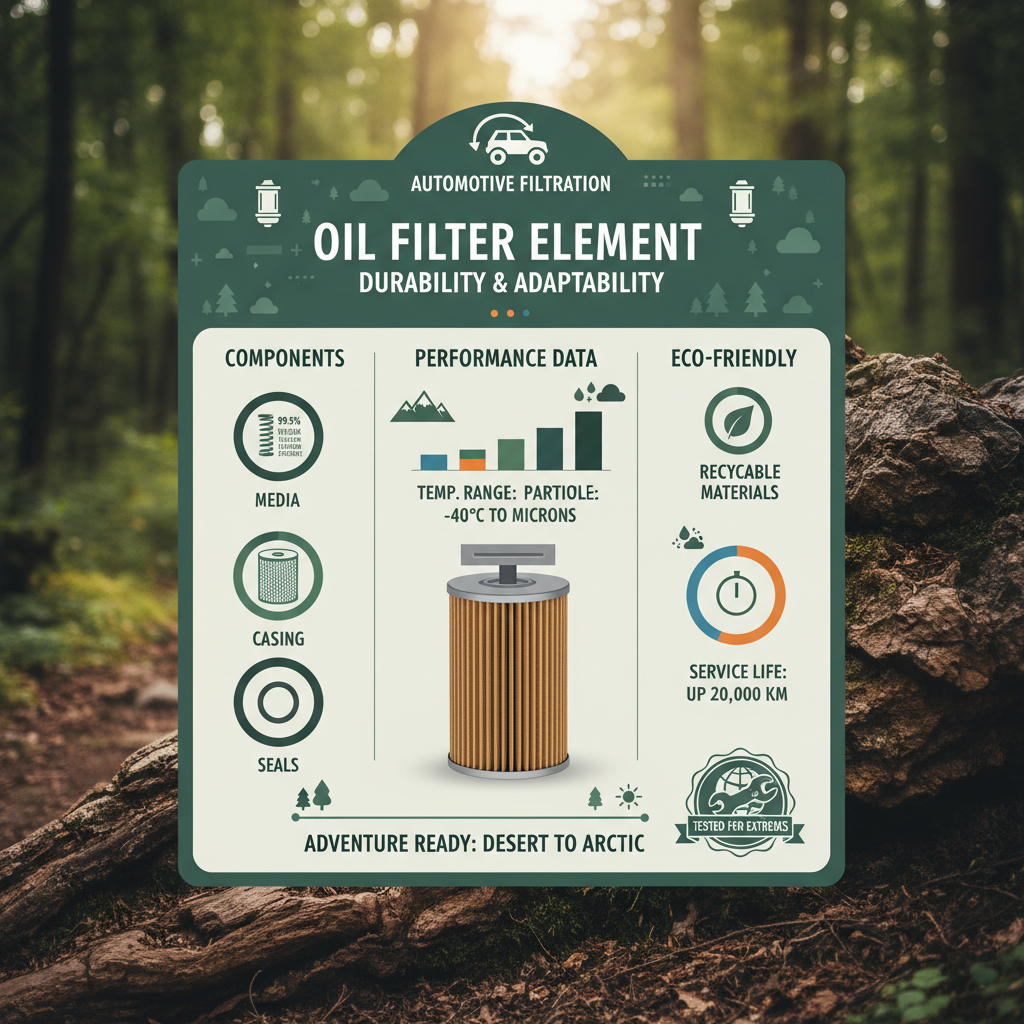
Durability and Longevity of oil filter element
I’ve seen filters that fall apart after just a few days in harsh conditions, and others that last for months without issue. Durability isn't just about the material; it’s about the quality of construction and the specific environment. Cheaply made oil filter elements can shed fibers into the oil, creating a new source of contamination.
Longevity is tied directly to maintenance practices. Regularly checking filter condition and replacing them according to the manufacturer's recommendations (or even more frequently in severe environments) is crucial. Keep a log of filter changes for each machine; it’s a small effort that can save you a fortune in the long run. And remember, a dirty filter isn't just bad for the engine; it also puts extra strain on the oil pump.
Proper storage of filters is also important. Keep them clean, dry, and protected from damage before installation. A damaged filter is a compromised filter. I always tell my crews: treat the filter with the same respect you’d treat a critical engine component – because that’s exactly what it is.
Performance Metrics for oil filter element
When evaluating oil filter elements, you've got to look beyond the price tag. Key metrics include filter efficiency (the percentage of particles removed), flow rate (how much oil can pass through the filter), and dirt-holding capacity (how much contamination the filter can trap before becoming clogged).
I’ve found that independent testing reports are invaluable. Don't just rely on the manufacturer's claims. Look for filters that have been certified to meet industry standards like ISO 16889. That tells you they’ve been independently verified to perform as advertised.
oil filter element Performance Comparison
Global Applications in Heavy Machinery
You’ll find the same need for high-quality oil filter elements everywhere there’s heavy machinery – from road construction in Europe to mining operations in Australia and large-scale infrastructure projects in Asia. The challenges are the same: keeping equipment running reliably in demanding conditions.
In remote locations, where getting replacement parts can be a logistical nightmare, filter reliability becomes even more critical. We need filters that can withstand extended service intervals without compromising performance. That’s why we often specify premium filters for projects in those areas.
Cost-Effectiveness and Lifecycle Analysis
I get it; budget is always a concern. But cheaping out on oil filter elements is a false economy. The cost of a single filter is a tiny fraction of the cost of an engine rebuild or a prolonged equipment downtime. A proper lifecycle cost analysis will show that investing in quality filters saves money in the long run.
Consider the cost of labor, the price of replacement parts, and the potential for project delays. Those costs quickly add up. A slightly more expensive filter that lasts longer and provides better protection can pay for itself many times over.
We do preventative maintenance schedules, and part of that includes consistent filter changes, the money saved on downtime easily covers the extra cost of better filters.
Future Trends in oil filter element Technology
We're starting to see some interesting developments in filter technology, like self-cleaning filters and filters with integrated sensors that can monitor filter condition in real-time. These technologies promise to further reduce downtime and improve equipment reliability.
There’s also a growing focus on sustainable filter materials and manufacturing processes. Biodegradable filter media and more efficient recycling programs are becoming increasingly important. The industry is moving towards minimizing environmental impact without sacrificing performance.
I anticipate that we'll see more predictive maintenance capabilities integrated with filter systems, allowing us to proactively identify and address potential issues before they lead to failures. That’s the future of equipment management.
Summary of key considerations for oil filter element selection
| Filter Material |
Micron Rating |
Flow Rate |
Application Environment |
| Cellulose |
20-25 microns |
Moderate |
Light-duty tasks |
| Synthetic Blend |
15-20 microns |
High |
Medium-duty construction |
| Full Synthetic |
5-10 microns |
Very High |
Extreme conditions, heavy-duty use |
| Extended Life Synthetic |
5-8 microns |
Very High |
Remote locations, extended service intervals |
| Eco-Friendly Biodegradable |
10-15 microns |
Moderate |
Environmentally sensitive areas |
| High-Efficiency Pleated |
2-5 microns |
High |
Critical applications, demanding environments |
FAQS
Without a doubt, it’s neglecting to replace them frequently enough. People think, “If it looks okay, it’s okay.” But filters become less effective over time, even if they don't look clogged. Following the manufacturer's recommended intervals is crucial, and even shortening them in severe environments is a good idea. Ignoring this leads to increased wear and tear on expensive equipment.
Not necessarily. Price doesn’t always equate to performance. You need to look at the specifications – micron rating, flow rate, dirt-holding capacity – and ensure they’re appropriate for your application. A cheap filter can be adequate for light-duty tasks, but for heavy construction equipment, investing in a quality filter is almost always worth it.
It depends on the machine, the oil, and the operating conditions. As a general rule, change the oil filter every time you change the oil. However, in dusty or severe environments, you might need to change it more frequently. Always refer to the equipment manufacturer's recommendations. Keeping a logbook helps with this!
The bypass valve is a safety feature. If the filter becomes completely clogged, the valve opens to allow oil to flow around the filter, preventing engine damage. However, this means unfiltered oil is circulating, so it’s a sign that the filter needs to be replaced immediately. Don't rely on the bypass valve as a long-term solution.
Besides the bypass valve activating, symptoms of a clogged filter include reduced engine performance, increased fuel consumption, and a drop in oil pressure. Regularly monitoring these parameters can help you identify a clogged filter before it causes serious damage. Also, simply checking the filter during routine maintenance can provide visual clues.
Synthetic filters offer superior filtration, higher dirt-holding capacity, and greater durability compared to cellulose filters. They can withstand higher temperatures and pressures, making them ideal for demanding applications. While they’re more expensive upfront, their longer service life and better protection can save you money in the long run.
Conclusion
Look, at the end of the day, the oil filter element is a small component with a massive impact. It’s not the most glamorous part of construction, but it’s arguably one of the most important. By understanding the different types of filters, their performance metrics, and the importance of regular maintenance, you can significantly reduce downtime, extend the life of your equipment, and ultimately, improve your bottom line.
Don’t underestimate the power of proactive filtration. Invest in quality filters, follow a rigorous maintenance schedule, and pay attention to the warning signs. It’s a small investment that will pay dividends in the long run. For reliable and high-performance oil filter elements, visit our website: www.congbenfilter.com.